EnglishClass 1

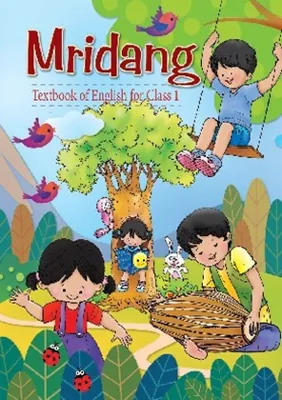
Mridang

English Textbook9 Chapters

Chapter notes

What you'll learn in Mridang

A quick revision map of Mridang — the core idea and five key takeaways from each chapter. Tap any chapter to read the full NCERT PDF and detailed notes.

01

Two Little Hands

Chapter 1 of the Class 1 English NCERT textbook (Mridang), "Two Little Hands", introduces body parts through a simple action poem where children clap, tap, and move along with the rhyme, then practise naming body parts in speaking and reading activities.

  • 1The poem "Two Little Hands" names hands, legs, eyes, head, ears, nose, and mouth and tells what each part does.
  • 2The last line of the poem is: "I have a little body that belongs to me."
  • 3Sight words for this chapter are "one" and "to"; new vocabulary words include hand, leg, head, eye, ear, nose, and mouth.
  • 4Children sing "Head, Shoulders, Knees and Toes" and touch each body part while singing.
  • 5The reading section teaches five senses: eyes see, ears hear, nose smells, mouth eats, skin feels.
02

Greetings

Chapter 2 of the Class 1 English NCERT textbook (Mridang), "Greetings", teaches children everyday greeting phrases like Namaste, Good morning, Good afternoon, Good evening, and Good night, and also introduces action words through the rhyme "Hop a Little", family vocabulary through the story "The Sparrow Family" and the song "My Family", and letter sounds for f through z.

  • 1Children learn five greeting phrases: Namaste, Good morning, Good afternoon, Good evening, and Good night.
  • 2The rhyme "Hop a Little" teaches ten action words: hop, jump, stamp, skip, tap, dance, twist, shake, yawn, and sleep.
  • 3Action words from the chapter also include comb, see, eat, hear, walk, and play, practised through a match-the-sentence activity.
  • 4The story "The Sparrow Family" shows Mama sparrow laying three eggs; baby sparrows later hop out of the nest and fly away.
  • 5Family vocabulary includes mother, father, brother, sister, grandmother, grandfather, aunt, uncle, and cousin.
03

Picture Time

Chapter 3 of the Class 1 English NCERT textbook (Mridang), "Picture Time", invites children to look at a picture of animals, sing two number rhymes, and practise rhyming words, animal names, and alphabetical order through simple activities.

  • 1The chapter is part of Unit 2, 'Life Around Us', in the Class 1 Mridang English textbook.
  • 2Children look at a picture and answer questions about animals, birds, and snakes they can spot.
  • 3The rhyme 'Fun with Numbers' counts from one to ten using a fish-catching story.
  • 4The poem 'Five Little Monkeys' counts down from five to one as each monkey falls from a tree.
  • 5Sight words taught are: each, is, and; new vocabulary includes little, fell, bumped, and holding.
04

The Cap-seller and the Monkeys

Chapter 4 of the Class 1 English NCERT textbook (Mridang), "The Cap-seller and the Monkeys", tells the story of a clever cap-seller who uses the monkeys' copying habit to get all his caps back, and pairs it with reading, speaking, writing, and listening activities that build early English vocabulary and phonics skills.

  • 1The cap-seller carries caps in a basket on his head and falls asleep under a tree.
  • 2Monkeys come down from the tree and take all the caps while the cap-seller sleeps.
  • 3The cap-seller gets his caps back because monkeys copy him — when he throws his own cap into the basket, they throw all the caps back too.
  • 4Phonics activities group words by their first sound: c (cap, cat, coat), m (monkey, mango, mouse), b (basket, bat, ball).
  • 5The chapter includes the full A-to-Z alphabet with one picture word per letter, from Ant to Zebra.
05

A Farm

Chapter 5 of the Class 1 English NCERT textbook (Mridang), "A Farm", introduces farm animals and their sounds through a fun rhyming song, then builds vocabulary around domestic animals, birds, and wild animals through a short reading passage and speaking activities.

  • 1The farm song features grandpa's cow (moo-moo) and hen (cluck-cluck) with the refrain E-I-E-I-O.
  • 2Jaggu from Nagpur introduces domestic animals: dog, cat, cow, rat, monkey, and snake.
  • 3Birds described include crow (black), pigeon (grey), sparrow (small), parrot (green with red beak), and peacock (many colours).
  • 4The help box lists seven farm animals: cat, cow, goat, pig, hen, cock, and sparrow.
  • 5Wild animals named in the chapter are tiger, lion, and elephant.
06

Fun with Pictures

Chapter 6 of the Class 1 English NCERT textbook (Mridang), "Fun with Pictures", introduces fruits and vegetables through a picture discussion, a sharing poem called "Fruits for All", and a short story about a girl named Mini visiting the market with her farmer father.

  • 1The chapter belongs to Unit 3 on Food in the Class 1 Mridang English textbook.
  • 2The poem 'Fruits for All' features five yellow mangoes and five red apples shared with five friends: a traveller, a bird, a squirrel, a rabbit, and you.
  • 3Mini's father is a farmer who sells vegetables at the market every Saturday.
  • 4At the market Mini sees roses, marigolds, and jasmine flowers, and fruits including apples, pineapples, oranges, and watermelon.
  • 5Sight words introduced in the chapter are: his, he, them, her, around, there, those, behind, with, these.
07

The Food we Eat

Chapter 7 of the Class 1 English NCERT textbook (Mridang), "The Food we Eat", introduces young learners to the foods children bring to school, the value of sharing food with friends, and where our food comes from, while building vocabulary through new words, sight words, syllable activities, and food riddles.

  • 1Children in the chapter bring poori with aloo sabzi, roti, idli with chutney, gobhi paratha, Godok, and chilla to school.
  • 2When one child has no lunch because her mother is sick, classmates share their chilla and paratha with her.
  • 3Farmers grow the food we eat, and we should thank them for their hard work.
  • 4We get milk from cows and can make curds and butter from milk; we get honey from bees.
  • 5New words taught include 'share', 'lunch', 'sick', 'fruits', 'today', and 'smiling'.
08

The Four Seasons

Chapter 8 of the Class 1 English NCERT textbook (Mridang), "The Four Seasons", introduces the four seasons — spring, summer, monsoon, and winter — through a poem and reading passages, and builds vocabulary and speaking skills around seasonal clothes, weather words, and nature activities.

  • 1The chapter poem names all four seasons: spring, summer, monsoon, and winter.
  • 2In summer, Brinda visits Hyderabad and wears a cotton frock because it is hot.
  • 3In winter, Prithvi goes to Shimla and wears warm clothes because it is cold.
  • 4Monsoon clouds are filled with rain and make you feel cool again.
  • 5The monsoon activity asks children to circle words like puddle, raindrops, and umbrella.
09

Anandi’s Rainbow

Chapter 9 of the Class 1 English NCERT textbook (Mridang), "Anandi's Rainbow", tells the story of a girl named Anandi who wakes up after rain to see a bright rainbow and uses its seven colours — violet, indigo, blue, green, orange, red, and yellow — to paint the flowers in her garden.

  • 1Anandi wakes up after rain and sees a huge, bright rainbow across a clear blue sky.
  • 2She goes into the garden with her favourite cat Milli.
  • 3Anandi uses rainbow colours to paint the flowers in her garden.
  • 4The seven rainbow colours named are: violet, indigo, blue, green, orange, red, and yellow.
  • 5She leaves yellow for the Sun so it looks bright and gay.

Want offline access with notes & solutions?

Download CBSE Prepmaster for free — includes NCERT solutions, flashcards, mock tests & more.

Download Free App