EnglishClass 8

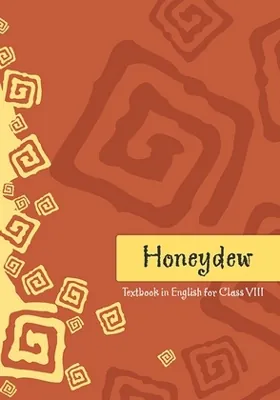
Honeydew

2025-26 Edition8 Chapters

Chapter notes

What you'll learn in Honeydew

A quick revision map of Honeydew — the core idea and five key takeaways from each chapter. Tap any chapter to read the full NCERT PDF and detailed notes.

01

The Best Christmas Present in the World

Chapter 1 of the Class 8 English NCERT textbook (Honeydew), "The Best Christmas Present in the World", is a short story by Michael Morpurgo. The narrator buys a damaged roll-top oak desk, finds a hidden 1914 letter by Captain Jim Macpherson describing the Christmas truce on the Western Front, and delivers it to Jim's wife Connie, now 101.

  • 1The narrator finds the letter while restoring a roll-top oak desk bought from a junk shop in Bridport; the letter was hidden in a secret drawer inside the last, stuck-fast drawer.
  • 2The letter is written in pencil, dated 26 December 1914, by Captain Jim Macpherson — a school teacher from Dorset — to his wife Connie, and was received by Connie on 25 January 1915.
  • 3On Christmas morning 1914, German soldiers (called 'Fritz') waved a white flag and called out 'Happy Christmas, Tommy!' across no man's land, initiating the spontaneous truce.
  • 4Jim meets Hans Wolf, a German officer from Dusseldorf who plays the cello, speaks almost perfect English, and whose favourite writer is Thomas Hardy and favourite book is Far from the Madding Crowd — though he had never set foot in England.
  • 5The two sides share schnapps, sausage, and Connie's Christmas cake (Hans Wolf praises the marzipan), then watch and cheer a football match — Fritz wins two goals to one — before returning to their trenches, where they exchange carols (the Germans sing 'Stille Nacht', the British reply with 'While Shepherds Watched').
02

The Tsunami

Chapter 2 of the Class 8 English NCERT textbook (Honeydew), "The Tsunami", is a non-fiction chapter of eyewitness accounts from the 26 December 2004 tsunami. It gathers survival stories from the Nicobar Islands, ten-year-old Tilly Smith's beach warning in Thailand, and accounts of animals fleeing to safety before the waves.

  • 1The tsunami struck on 26 December 2004, triggered by a massive earthquake off northern Sumatra, hitting the Andaman and Nicobar Islands and the Tamil Nadu coast among other areas.
  • 2Ignesious of Katchall lost his wife, two children, his father-in-law, and his brother-in-law; only three of his children who stayed with him were saved.
  • 3Policeman Sanjeev managed to save his wife and baby daughter but died trying to rescue the guesthouse cook's wife from the waves.
  • 4Thirteen-year-old Meghna spent two days floating on a wooden door after being swept away with her parents and seventy-seven others; she was finally brought to shore by a wave.
  • 5Ten-year-old Almas Javed lost her parents, grandfather, mother, and aunts; she survived by clinging to a floating log and regained consciousness in a hospital in Kamorta.
03

Glimpses of the Past

Chapter 3 of the Class 8 English NCERT textbook (Honeydew), "Glimpses of the Past", is a comic-strip prose piece tracing Indian history from 1757 to 1857 through pictures and speech bubbles. It covers East India Company conquests, oppressive taxation, reformer Ram Mohan Roy, and the 1857 First War of Independence, adapted from S.D. Sawant's "Our Freedom Movement".

  • 1The British East India Company extended its power across India between 1757 and 1849 by exploiting rivalries among Indian princes, who were described as short-sighted; rulers like Tipu of Mysore who fought back died fighting.
  • 2Heavy British taxation forced farmers to abandon their fields, and famines killed fifteen lakh Indians between 1822 and 1836; Governor-General Bentinck reported that 'the bones of cotton weavers are bleaching the plains of India.'
  • 3Under Regulation III of 1818, an Indian could be jailed without trial; British officers drew large salaries and built private fortunes while Indian artisans and industries were ruined by policies that exempted British goods from import duty.
  • 4Ram Mohan Roy (1772–1833), a learned man from Bengal, called for social reform, opposed superstitions, advocated scientific and practical knowledge, crossed the seas to England, and started newspapers that the British stopped in 1823.
  • 5In 1835, Macaulay recommended English-medium education; while this produced clerks for petty British jobs, it also produced a new generation of intellectuals who sought to convey Indian grievances to the British Parliament.
04

Bepin Choudhury's Lapse of Memory

Chapter 4 of the Class 8 English NCERT textbook (Honeydew), "Bepin Choudhury's Lapse of Memory", is a humorous short story by Satyajit Ray. A solitary executive is convinced by a stranger and multiple witnesses that he forgot a 1958 trip to Ranchi, only to discover it was an elaborate hoax by an old friend he had once refused to help.

  • 1Bepin Choudhury is a solitary, book-loving executive who visits Kalicharan's bookshop in New Market every Monday to buy crime stories, ghost stories, and thrillers — at least five at a time.
  • 2Parimal Ghose confronts Bepin Babu at the bookshop, claiming they met in Ranchi in October 1958, that Ghose arranged a car to Hudroo Falls, and that Bepin Babu fell and cut his right knee there.
  • 3Bepin Babu insists he spent Puja of 1958 in Kanpur at his friend Haridas Bagchi's place, not Ranchi — but Haridas has left for Japan and cannot be reached to confirm.
  • 4When Bepin Babu phones Dinesh Mukerji to check, Mukerji confirms he and Bepin Babu were both in Ranchi in 1958, deepening Bepin Babu's anxiety.
  • 5Chunilal, Bepin Babu's old school friend who previously worked at a travel agency, confirms that he personally booked Bepin Babu's railway ticket for Ranchi and saw him off at the station.
05

The Summit Within

Chapter 5 of the Class 8 English NCERT textbook (Honeydew), "The Summit Within", is a personal essay by Major H.P.S. Ahluwalia, a member of the first successful Indian Everest expedition in 1965. He reflects on why people climb mountains and argues that the harder, higher challenge is the inner summit of the mind, which each person must climb alone.

  • 1Major H.P.S. Ahluwalia was a member of the first successful Indian expedition to Mount Everest in 1965.
  • 2Standing on the summit, his dominant emotion was humility rather than joy, accompanied by a tinge of sadness at having done the 'ultimate' in climbing.
  • 3He identifies why people climb mountains: endurance, persistence, and will power; love of mountains as nature at its best; and a sense of communion with God.
  • 4Everest drew him because it is the highest and mightiest, has defied many previous attempts, and demands the last ounce of one's energy — a brutal struggle with rock and ice that cannot be abandoned halfway.
  • 5At the summit, Ahluwalia left a picture of Guru Nanak; teammate Rawat left a picture of Goddess Durga; Phu Dorji left a relic of the Buddha; and Edmund Hillary had buried a cross — symbols of reverence, not conquest.
06

This is Jody's Fawn

Chapter 6 of the Class 8 English NCERT textbook (Honeydew), "This is Jody's Fawn", is a story by Marjorie Kinnan Rawlings. After his father Penny survives a rattlesnake bite by using a doe's organs as a remedy, young Jody is troubled by the orphaned fawn left behind and persuades his father to let him bring it home and raise it.

  • 1Penny Baxter is bitten by a rattlesnake and kills a doe, using its liver to draw out the poison and save his life.
  • 2Jody is troubled by the thought of the orphaned fawn and persuades his father with the argument that they took the fawn's mother and it was not to blame.
  • 3Penny tells Jody he has him 'hemmed in' and gives permission, saying it would be ungrateful to leave the fawn to starve.
  • 4Jody rides back with Mill-wheel but chooses to search for the fawn alone, not wanting to share the private moment of finding it.
  • 5Jody identifies the fawn as a male because its spots are arranged in a line — his father had told him that on a doe-fawn the spots are 'every which way'.
07

A Visit to Cambridge

Chapter 7 of the Class 8 English NCERT textbook (Honeydew), "A Visit to Cambridge", is a travel memoir by Firdaus Kanga, a wheelchair-using writer from Mumbai. Excerpted from his book Heaven on Wheels, it recounts his meeting with physicist Stephen Hawking, as the two men — both living with disability — talk of courage, inspiration and unhappiness.

  • 1The chapter is a travel memoir by Firdaus Kanga, excerpted from his book Heaven on Wheels; Kanga was born with brittle bones and travels by wheelchair.
  • 2Stephen Hawking holds Isaac Newton's Chair at the University of Cambridge and is described as the author of A Brief History of Time, one of the biggest best-sellers ever.
  • 3Hawking communicates through a computer voice synthesiser, tapping a small switch with his long, pale fingers — his only remaining movement.
  • 4When asked about bravery, Hawking replies: "I haven't been brave. I've had no choice." When asked if he is often laughing inside, he says he finds it amusing when people patronise him.
  • 5Hawking's advice to disabled people is to concentrate on what they are good at; he considers events like the Disabled Olympics a waste of time.
08

A Short Monsoon Diary

Chapter 8 of the Class 8 English NCERT textbook (Honeydew), "A Short Monsoon Diary", is a set of diary extracts by Ruskin Bond. Running from June to March, the entries record his close observations of the monsoon in the Mussoorie hills — mist, seasonal birds and animals, the leopard, wildflowers, and the slow turn from monsoon to winter.

  • 1The diary spans June 24 to March 23, set in Mussoorie, and is written by Ruskin Bond.
  • 2On June 24, monsoon mist climbs the hill and silences all birds; Bijju calls to his sister through the mist but cannot be seen.
  • 3On June 27, seasonal arrivals include a leopard (which lifted a dog and attacked a cow before fleeing from Bijju's mother), leeches, scarlet minivets, drongos, and tree creepers.
  • 4The cobra lily is a key seasonal indicator: it first appears in June at the start of the monsoon and its seeds turn red by August 31, signalling the rains are coming to an end.
  • 5August brings endless rain and mist for eight or nine days; late-monsoon wildflowers bloom — wild balsam, dahlias, begonias, ground orchids, mauve lady's slipper, and white butterfly orchids.

More English books

Want offline access with notes & solutions?

Download CBSE Prepmaster for free — includes NCERT solutions, flashcards, mock tests & more.

Download Free App